
A Komuso practice · 3 minute read
Where do youhold your breath?
Everyone has the moments. Most of us just never catch them. Here are the seven to look for.

The signal
Your breath moves first
Before the thought, before the feeling has a name, the breath has already changed. It is the earliest signal you own.
It climbs into the top of the chest. Short, quick, barely there.
It stops altogether, usually while you read or wait. You notice when you finally let it go.
It speeds up with the thoughts. High, quick, and hard to catch in the moment.
The seven places
Where it happens most
Find your two or three. Tap them, and they'll be waiting for you on Find Your Moment.

Why it happens
The body gets ready before you do
When your attention narrows, your body braces. The breath is the first thing it borrows from.
The body is doing its job, a little early. That makes the breath the most honest signal you have: it changes before you have named what is happening.
You cannot stop it changing, but you can learn to see it change.
The one thing to do
In that beat
The next time one of your moments arrives, you will notice it a beat sooner. Here is what goes in the beat.
Breathe in through your nose.
Long, slow exhale through the Shift.
Repeat.
Noticing is the first of the four. Once you have caught the moment, the other three tend to follow on their own.
Training the radar
A week of noticing
Nobody catches every moment. Nobody needs to. This is how it builds.
An hour later you remember the held breath in the meeting. That counts. Noticing afterward is how noticing in the moment gets built.
Mid-email, you feel the chest tighten. One slower exhale through the Shift, then back to the email.
You see the moment coming, and the breath goes in front of it.
From a customer
On forgetting to breathe
“I have always had the issue of simply forgetting to breathe. Now with the shift I am always wearing a beautiful reminder to breathe.”
Sasha · Verified buyer, Classic Shift
Good to know
The small details
Is it different for everyone?+
Yes. Some people hold their breath, some go shallow, some speed up. The tells above are the common ones; after a few days of looking you'll know which is yours.
Does paying attention to my breath make it worse?+
Usually the opposite. A breath you can see is a breath you can change. Notice it without judging it, and let the exhale do the rest.
My moment isn't on the list.+
The list is only the common ones. Yours counts just the same, and you can use it on Find Your Moment.
Do I need the Shift to notice?+
No. Noticing is free. The Shift is for the beat after, when you want the exhale to slow down without having to think about it.

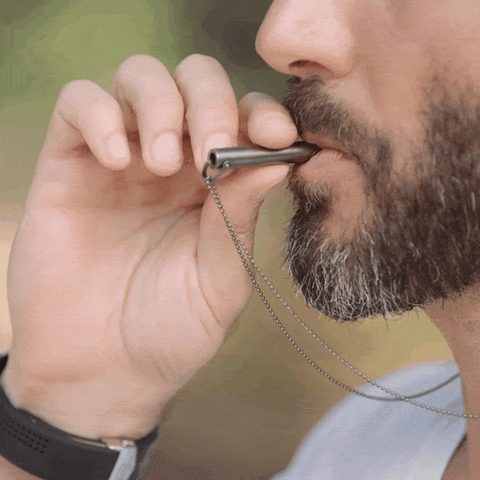
Reading this without a Shift?
A necklace you breathe out through.
Everything above works with unaided slow breathing. The Shift is there for the beat after you notice: it slows your exhale, a simple way to pause when the day gets hectic, and it is on your chest when the moment is not calm.
Breathe with us.Komuso
